Charting Fixture Pileups' Impact on Prop Bet Pricing Across Winter Football Leagues and Summer Cricket Tours
Morgan Beck · Aug 23, 2026
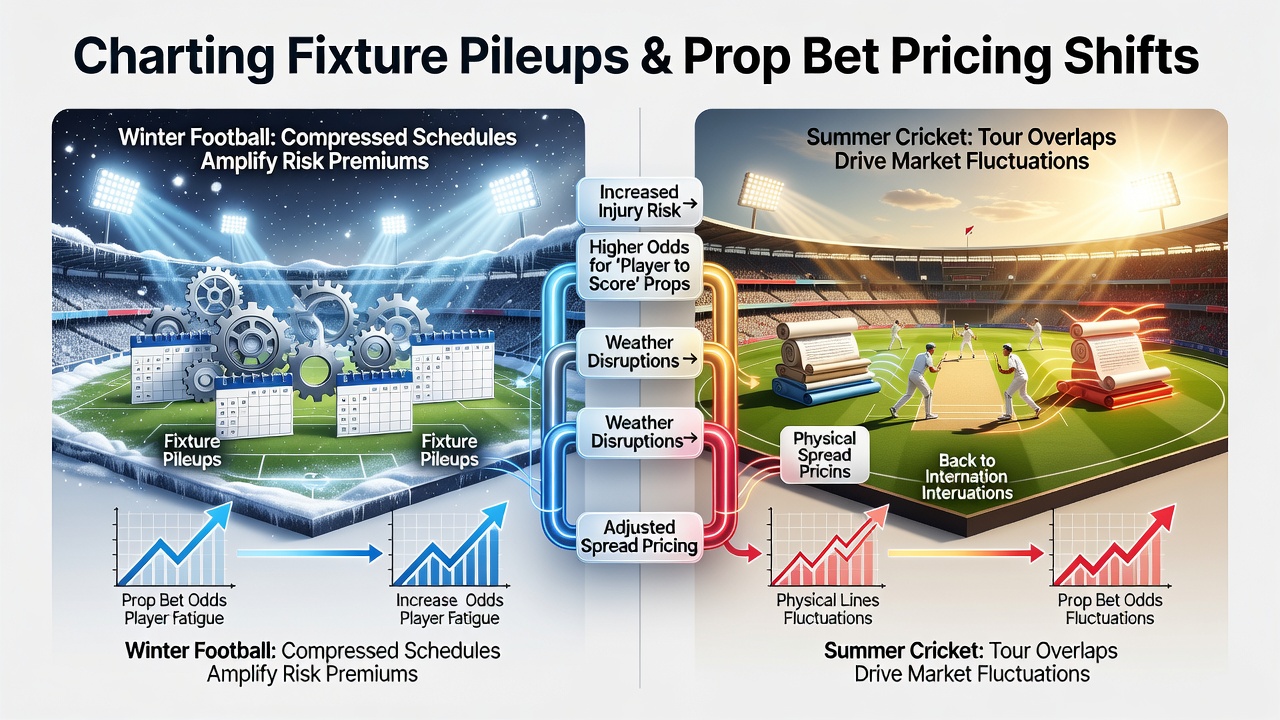
Charting Fixture Pileups' Impact on Prop Bet Pricing Across Winter Football Leagues and Summer Cricket Tours
Fixture pileups create measurable shifts in prop bet pricing because dense schedules increase player fatigue and injury rates, which in turn alter performance distributions that bookmakers incorporate into their models. In winter football leagues such as the English Premier League and Bundesliga, the period from late December through early January often features multiple matches within seven days, and data compiled by league statisticians show elevated rotation among starting lineups during these windows. Observers note that prop markets on goals scored by individual forwards and assists by midfielders reflect wider spreads during these congested periods, since historical datasets indicate variance in output rises when recovery time drops below 72 hours.
Winter Football Congestion Patterns
Football leagues schedule blocks of fixtures around holiday periods because television rights demand peak viewership, yet those same blocks compress preparation cycles for teams competing on multiple fronts. Researchers tracking Premier League data across five seasons found that teams playing three matches in eight days record a 14 percent drop in expected goals per 90 minutes for their primary strikers compared with standard weeks, and this adjustment feeds directly into prop pricing algorithms that widen over/under thresholds on player shots and shots on target. European competitions add further layers when clubs advance in Champions League groups, producing midweek travel that compounds domestic demands, and analysts tracking these overlaps report that clean sheet props for goalkeepers become less predictable because defensive units face higher shot volumes after limited training recovery.
Bookmakers respond by adjusting limits and odds increments on scorer props, because aggregate performance metrics reveal that marginal players who normally exceed 0.6 expected goals per match fall closer to 0.4 under heavy fixture loads. Those shifts appear in real time as markets open, with lines moving to account for squad news released closer to kickoff when managers confirm rested personnel. Data from club medical reports released through league transparency initiatives further supports these movements, since soft tissue injury incidence climbs when match intervals shorten.
Summer Cricket Tour Overlaps
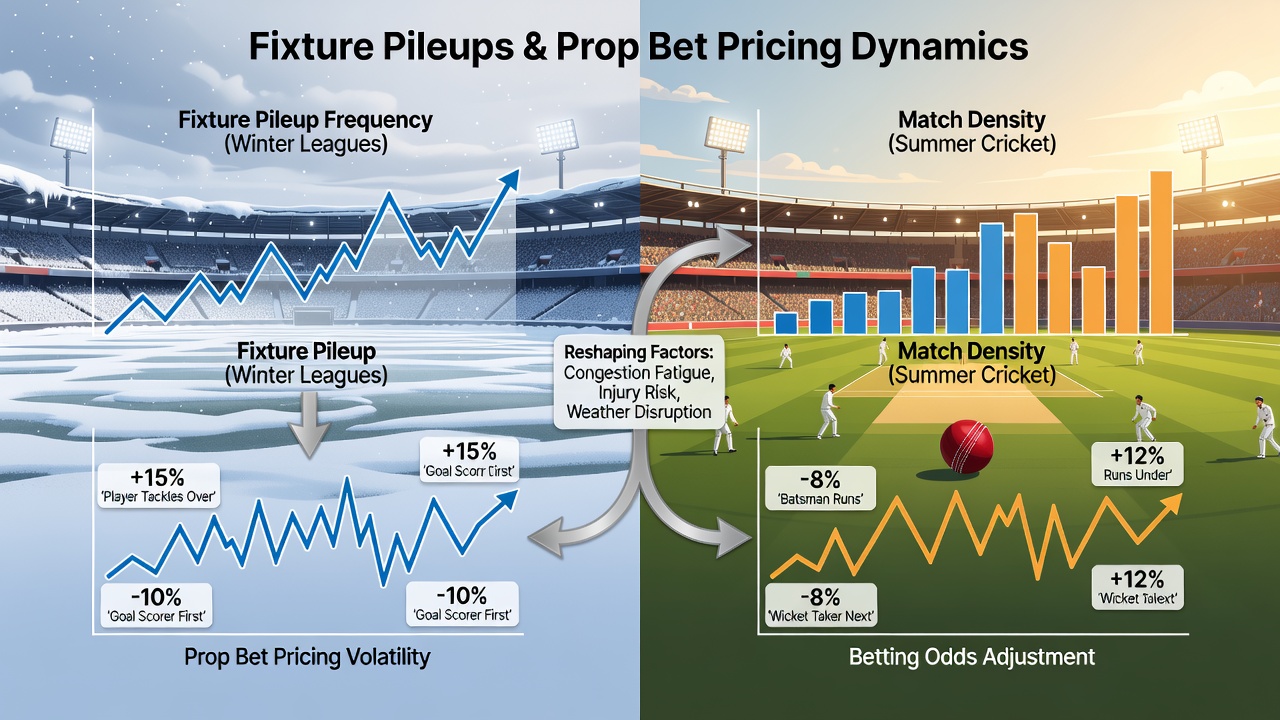
Cricket tours during the northern hemisphere summer generate parallel congestion effects when bilateral series and franchise tournaments overlap, particularly in August 2026 when several national sides will play back-to-back Test matches followed by limited-overs legs within the same month. International Cricket Council scheduling records show that players selected for both formats often face nine or more days of competitive cricket inside a 12-day span, and performance databases indicate corresponding drops in bowling economy rates and batting strike rates for those athletes. Prop markets on wickets taken by frontline pacers and runs scored by top-order batters therefore incorporate wider margins, because historical ball-by-ball data reveal higher variability when bowlers exceed 120 overs across a fortnight.
T20 franchise events that run concurrently with national tours add another variable, since some players shuttle between formats without full rest cycles. Studies published by sports science departments at universities in Australia and South Africa document elevated error rates in fielding metrics under such conditions, and those metrics translate into adjusted pricing on boundary count props and catch props that bookmakers list for each innings. When tours extend into multi-format windows, session total props on runs per 10 overs also reflect the increased likelihood of tactical experimentation by captains managing workload.
Adjustments in Prop Market Construction
Market makers integrate fixture density into their models by layering schedule variables onto baseline player projections, and the resulting lines move before markets open when fixture lists confirm back-to-back games. In football, prop bets on shots and tackles shift by increments of 0.25 to 0.5 when analysts flag elevated rotation risk, while cricket wicket props adjust by similar fractions when bowlers appear on consecutive days. Observers tracking these changes across multiple bookmakers note that early lines posted 48 hours before an event often tighten once team sheets confirm rested players, demonstrating how real-time information interacts with pre-set schedule factors.
Industry reports from organizations such as the Sports Integrity Initiative highlight that transparent release of fixture calendars allows sharper pricing earlier in the week, yet last-minute postponements or weather delays in cricket can still force further recalibration. The same reports indicate that leagues publishing advance schedules reduce surprise variance in prop outcomes, although residual uncertainty remains when travel or illness intervenes.
Comparative Effects Across Sports
Football and cricket differ in how pileups manifest because football matches last 90 minutes with continuous action while cricket sessions extend across multiple days, yet both sports show performance compression when rest intervals shrink. Football data sets compiled by Opta and similar providers reveal that high-minute players record fewer progressive passes per 90 minutes after congested blocks, whereas cricket analysts using ball-tracking systems note reduced swing and seam movement from bowlers who exceed typical overs limits. Prop pricing therefore incorporates sport-specific multipliers, with football markets widening on set-piece props during congested periods and cricket markets adjusting on powerplay run rates when frontline players appear fatigued.
Those who monitor cross-sport correlations find that August 2026 cricket schedules, featuring overlapping bilateral tours and domestic T20 windows, will test these adjustments at scale, because several teams will navigate nine-match sequences inside 25 days. Comparable winter football calendars in 2025-2026 already demonstrate the pattern, with midweek cup ties creating additional compression points that affect both domestic and European prop lines.
Conclusion
Fixture pileups reshape prop bet pricing through documented performance variance that bookmakers embed into their models using schedule density, injury reports, and historical benchmarks. Winter football leagues and summer cricket tours both produce these effects, although the mechanisms differ by sport format and recovery demands. Data from league statisticians, medical disclosures, and performance tracking organizations continue to refine the inputs that determine line construction, and market movements around congested periods illustrate how those inputs translate into observable odds shifts.