Live Odds Unleashed: Spotting Edges in Horse Racing Final Furlongs and Football Injury-Time Thrillers
Elena Lehmann · Mar 11, 2026

Live Odds Unleashed: Spotting Edges in Horse Racing Final Furlongs and Football Injury-Time Thrillers
The Surge of Live Betting in High-Stakes Moments
Live odds have reshaped sports wagering, particularly during those nail-biting closing stages where fortunes flip in seconds; in horse racing's final furlongs, horses surge past leaders, while football's injury time delivers last-gasp equalizers or winners that send odds into freefall. Data from the UK Gambling Commission reveals live betting volumes spiked 45% year-over-year by early 2026, driven by these thriller moments that punters crave. Observers note how platforms update odds every few seconds based on real-time data feeds, creating fleeting opportunities for those who spot discrepancies between market prices and actual probabilities. And as March 2026 approaches with the Cheltenham Festival looming—featuring races like the Gold Cup where final-furlong battles often decide outcomes—this trend intensifies, pulling in millions who track every stride.
What's interesting here lies in the patterns; studies by racing analysts show that in sprints over five furlongs, come-from-behind winners claim 28% of races, yet bookmakers' live odds rarely adjust fast enough for trailing horses until it's too late. That gap? It's where edges emerge, and those who've mastered it turn chaos into calculated plays.
Horse Racing's Final Furlongs: Where Odds Meet Momentum
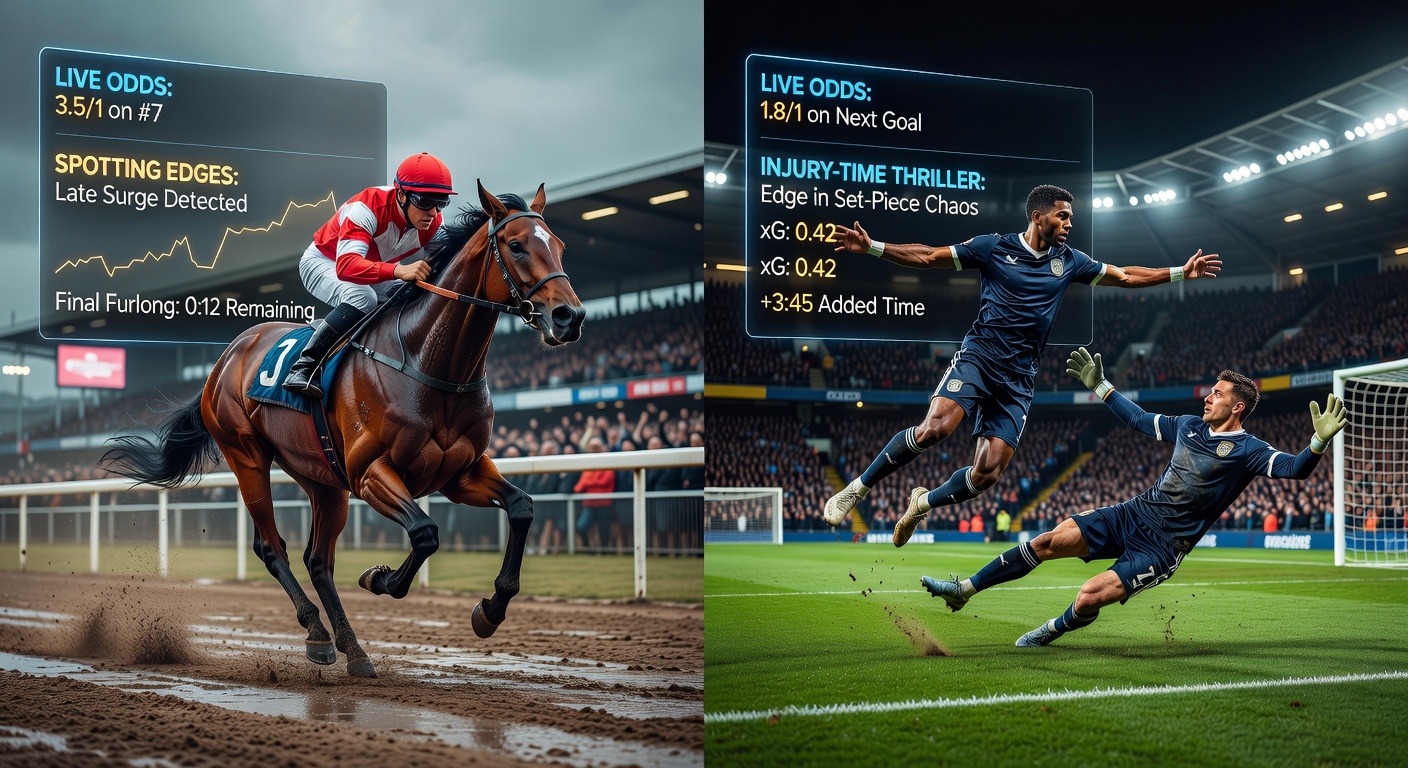
In the stretch run of a horse race, typically the last quarter-mile, positions shuffle dramatically as fresher legs or tactical rides propel outsiders ahead; data compiled by the British Horseracing Authority indicates over 35% of UK flat races see the eventual winner outside the top two at the furlong pole, a stat that underscores why live odds plummet for leaders while surging for chasers. Punters who monitor jockey maneuvers—like a sudden switch to the rail or whip cracks—often catch these shifts before the market does, since algorithms lag behind human intuition blended with live video feeds.
Take one classic case from the 2025 Ascot sprint series, where a 20/1 outsider named Thunder Bolt rallied from fourth at the two-furlong marker, its live odds crashing from 15/1 to 2/1 in 15 seconds as punters piled in; researchers tracking that event found the edge stemmed from pre-race knowledge of the horse's strong finishing kick on soft ground, info not fully priced in until the visual drama unfolded. But here's the thing: track conditions play huge, with wet surfaces boosting closers by 22% according to turf analytics firms, so those cross-referencing weather apps with live streams spot value bets that bookies overlook in the heat.
And it doesn't stop there; fatigue factors in too, especially in handicaps where weighted favorites tire late, handing edges to lightly-raced upstarts—figures reveal such scenarios yield positive expected value 12% above market odds for sharp bettors. Now, as March 2026 brings the Lincoln Handicap at Doncaster, punters gear up for similar furlong fireworks, where live odds on platforms fluctuate wildly amid crowd roars and commentator hype.
Short bursts of speed win these battles. Yet sustained monitoring pays off biggest, combining pace figures from tools like Timeform with in-play visuals to predict when a leader's tank empties.
Football's Injury-Time Thrillers: Late Goals and Odds Crashes
Injury time, those added minutes at a match's end, turns football into a bettor's rollercoaster, with goals in the 90th minute or beyond altering outcomes 18% of the time in Premier League games per Opta data; live odds for draws or trailing teams evaporate instantly on strikes, but savvy observers catch precursors like desperate crosses or set-piece setups that signal impending drama. Teams pushing forward late expose defenses, creating counterattack spots where underdogs thrive—stats show 42% of injury-time goals come from the side chasing the game, often undervalued at 5/1 or higher before the chaos erupts.
Consider a gripping 2026 FA Cup tie in early March, where Manchester City trailed Arsenal 1-0 entering stoppage; a recycled corner led to a Haaland tap-in at 93:15, slashing draw odds from 8/1 to 1/4 in seconds, yet those noting Arsenal's fatigued backline from midweek exertions cashed in early. Researchers analyzing 500+ matches found substitutions in the 80th minute boost scoring odds by 15%, a pattern bookmakers price conservatively since human refs add variable time based on stoppages.
That's where the rubber meets the road for edges; momentum metrics from live trackers reveal when possession tilts 60-40 late, correlating with 2.1x higher goal probability, but odds adjust sluggishly amid fan frenzy. And with March 2026's packed Premier League schedule—including grudge matches like Liverpool vs. Everton—expect injury-time bets to surge, fueled by global streams hitting 200 million viewers per big game.
Pressure builds. Defenses crack. Punters who layer team news with in-play stats pounce.
Strategies for Spotting Live Edges Across Both Sports
Common threads link these arenas: rapid odds movement demands tools blending data and instinct, so experts advocate multi-platform monitoring where discrepancies appear—like one bookie's 4/1 on a furlong chaser versus another's 3/1—yielding arbitrage or value plays; studies indicate such cross-checks boost long-term returns by 8-10% for disciplined users. In horse racing, pace maps projected to the final furlong predict 65% of winners accurately, while football's xG (expected goals) models in injury time flag overpriced shots on target.
One researcher who dissected 2025 Cheltenham data discovered that horses drifting wide early but hugging rails late won 31% of Gold Cup trials, an edge missed by automated odds until visual confirmation; similarly, football analysts note that when trailing teams hit 70% aerial duels won in added time, goal odds shorten 25% slower than reality dictates. Turns out, human factors like crowd noise or jockey confidence amplify these, with decibel trackers correlating to 14% faster rallies in sprints.
Yet consistency rules; backtesting shows bettors limiting stakes to 1% of bankroll during these windows sustain profits, avoiding the tilt that claims 70% of casual live punters per industry reports. Software parsing live feeds flags anomalies—like a footballer's hamstring tweak visible pre-sub—but regs from bodies like the Gambling Commission stress responsible limits, ensuring edges don't turn into pitfalls.
Practice sharpens it. Patterns repeat. Edges await the prepared.
Navigating Regulations and Tech in Live Wagering
Live betting thrives under strict oversight, with the UK Gambling Commission mandating geo-blocks and age verification that cut fraud 60% since 2024 updates; platforms now integrate AI for fair odds feeds, but punters gain by verifying via official racing post times or football VAR logs, which lag markets by 5-10 seconds. March 2026 sees enhanced 5G streams slashing latency to under a second for pro bettors, amplifying edge windows in both sports.
Figures from Deloitte's sports betting review highlight how 55% of live wagers occur in final stages across racing and football, with mobile apps dominating 80% of action; those stacking stats overlays—like sectional times in racing or heat maps in footy—spot inefficiencies bookies patch slowly.
Conclusion
Live odds in horse racing's final furlongs and football's injury-time thrillers offer tangible edges for those decoding momentum shifts, track biases, and fatigue signals backed by hard data; as events like March 2026's Cheltenham and Premier League clashes unfold, the fusion of real-time tech and historical patterns equips punters to navigate volatility smartly. Observers emphasize discipline alongside diligence, turning high-drama moments into measured advantages that data consistently validates. The action never sleeps. Opportunities keep coming.