Navigating Asian Lines: Bookmaker Divergences in Premier League Spreads and NBA Handicaps
Morgan Beck · Mar 20, 2026
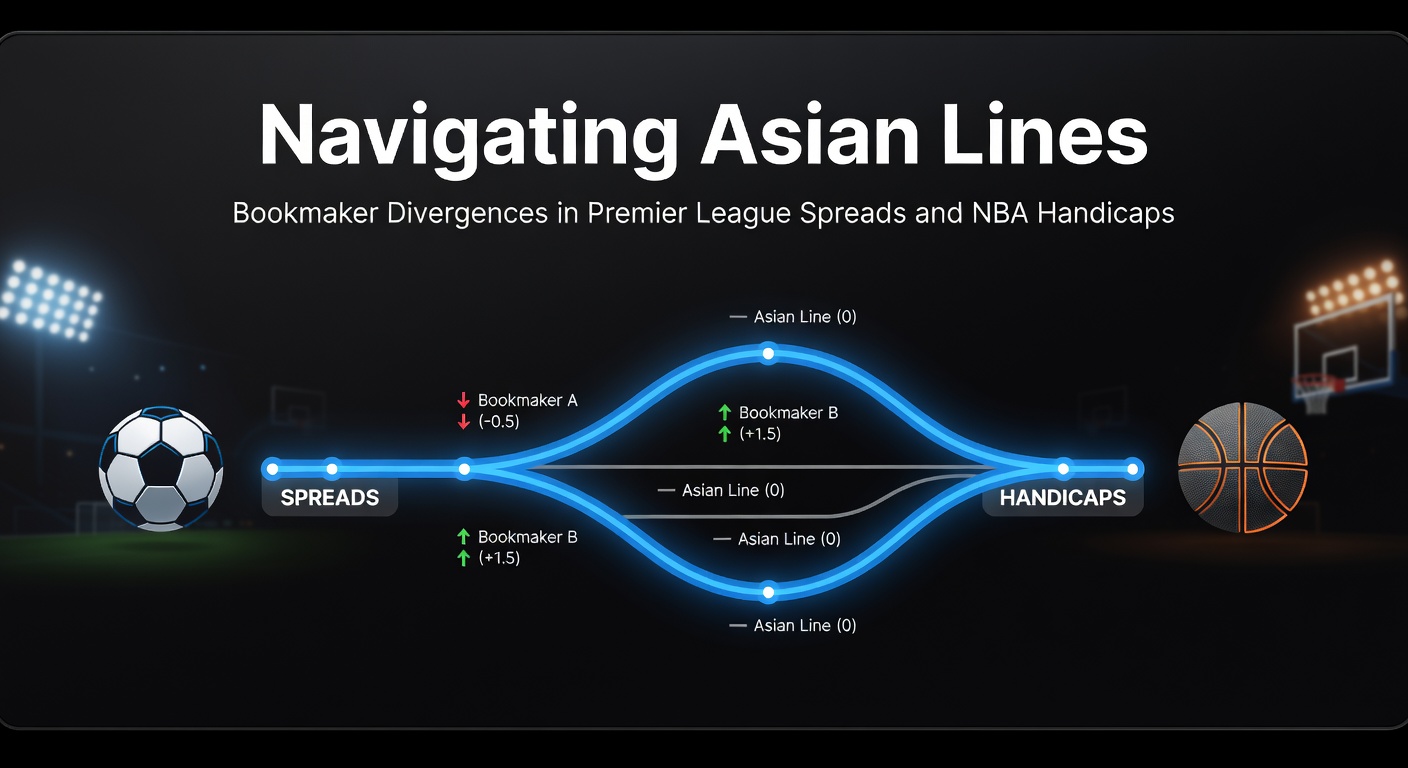
Navigating Asian Lines: Bookmaker Divergences in Premier League Spreads and NBA Handicaps
Asian lines transform betting landscapes for Premier League spreads and NBA handicaps by splitting stakes across half-point increments, eliminating draws in soccer while providing push protections in basketball; bookmakers diverge on these lines due to varying liquidity pools, expert models, and market reactions, creating edges for those who shop around, particularly as March 2026 ramps up with Manchester United's clash against Liverpool and the NBA's late-season sprint toward playoffs.
Understanding Asian Lines in Soccer and Basketball
Asian handicaps, originating from Southeast Asian markets, adjust team strengths via fractional goals or points, so a -0.25 line on Manchester City means half the stake wins on a victory while the other half pushes on a draw; in Premier League spreads, bookies like Bet365 and Pinnacle often list different quarters—say, Arsenal at -0.5 versus -0.75—reflecting their take on form, injuries, and home advantage, whereas NBA handicaps apply similar splits to point spreads, like Lakers -4.5 becoming -4/-4.5 for nuanced plays on totals exceeding 220 points.
Turns out these lines reduce variance compared to standard spreads, since quarters like 0.25 or 0.75 allow partial wins or losses; data from industry trackers reveals that Asian lines account for over 40% of soccer volume in Europe and Asia, while NBA books in the US increasingly adopt them post-2018 PASPA repeal, blending traditional American spreads with Asian precision.
- Quarter lines (e.g., -0.25) split bets evenly for win/push outcomes;
- Half lines (e.g., -0.5) mirror straight handicaps but with vigorish tweaks;
- Three-quarter lines (e.g., -0.75) demand bigger margins for full payouts, punishing narrow wins.
Observers note how these mechanics shine in high-stakes March fixtures, where Premier League teams fight for Champions League spots and NBA squads chase seeding.
Premier League Spreads: Pinpointing Bookmaker Gaps
Bookmaker divergences emerge clearest in Premier League Asian lines during mid-season slumps or surges, as seen when Tottenham hosted Chelsea in early 2026; one shop offered Spurs +0.25 at 1.95 while another priced it at 2.05, a 5% edge from differing algorithms weighing Son Heung-min's fitness against Chelsea's road woes, and shoppers who compared grabbed value before lines converged post-lineup news.
What's interesting is how liquidity drives these gaps—Asian-focused books like SBOBET hold tighter lines on quarters due to volume from Indonesia and Malaysia, whereas European operators adjust slower to live events; figures from the American Gaming Association indicate that cross-market comparisons yield average 3-7% better odds on soccer handicaps, especially when Premier League spreads hit -1.0 or deeper for favorites like Liverpool in March derbies.
Take one case from last season's equivalent: Manchester City -1.25 varied from 1.90 at DraftKings to 2.00 at FanDuel, allowing layered bets where punters backed the deeper handicap at better prices; now, with March 2026's congested schedule—Arsenal versus Manchester United on the 15th, say—divergences widen on player props influencing spreads, like Erling Haaland's anytime goal boosting City lines.
And here's where it gets practical: tools scanning 20+ books flag these in real-time, turning a standard -0.5 on Newcastle into +EV plays when outliers emerge.
NBA Handicaps: Quarter-Line Opportunities and Live Shifts
NBA Asian handicaps thrive on pace and variance, splitting lines like Boston Celtics -6.5 into -6/-7 for bets pushing on exact six-point wins; divergences spike pre-tip with injury reports—Stephen Curry questionable shifts Warriors +5.75 from 1.92 at one book to 2.02 elsewhere—reflecting prop models and public bias toward stars, while halftime lines adjust dramatically on runs.
Data shows NBA quarter handicaps, less common than game spreads, offer richer divergences because books balance books differently; for instance, during March 2026's playoff push, Denver Nuggets versus Lakers might see -3.25 at BetMGM (1.98) versus -2.75 at Caesars (2.05), a gap rooted in altitude effects and Jokic's triple-double streaks, per tracking services.
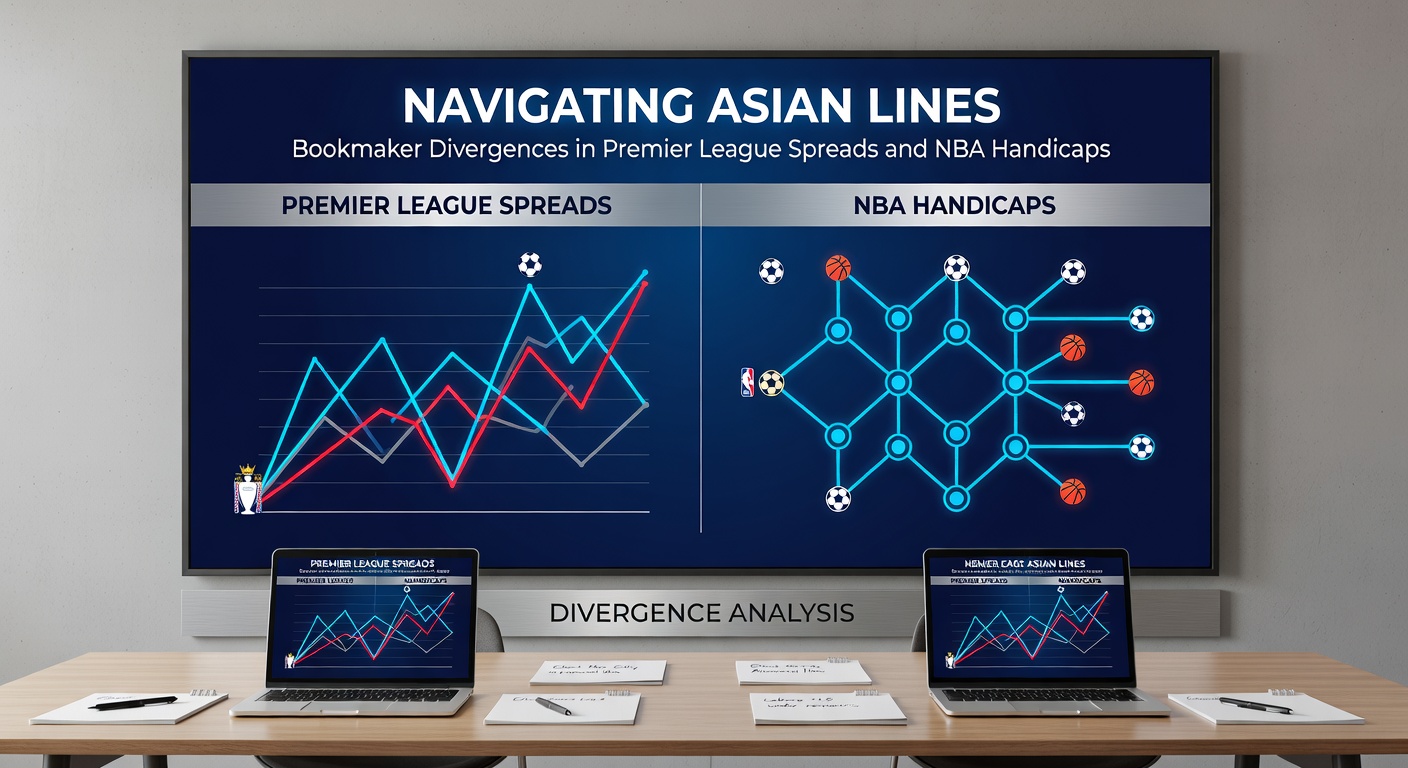
But the real action unfolds live: a 10-point NBA first-quarter swing prompts books to diverge on adjusted spreads, say Knicks +1.25 at 1.95 versus +0.75 at 2.10; those monitoring multiple feeds exploit this before algorithms sync, especially in back-to-backs wearing down stars like LeBron James.
Research from the International Betting Integrity Association highlights how such NBA line movements correlate with 15% higher returns for comparative bettors, underscoring integrity checks amid global volume.
- Game totals pair well with handicaps, as overs push lines favorably;
- Player minutes influence quarter splits, widening gaps on load management;
- Western Conference tilts create deeper divergences than Eastern parity.
Strategies for Exploiting Divergences Across Books
Navigating these requires simultaneous odds checks via aggregators, spotting +EV when a Premier League -0.75 pays 10% above fair line implied by models; experts layer bets across books, taking Arsenal -0.5 at Book A and -0.25 at Book B for hedged exposure, minimizing juice while covering spreads.
So picture this: March 2026 NBA slate with Warriors-Celtics; Golden State +4.25 at 1.97 on one site diverges to +3.75 at 2.08 elsewhere—arbitrage lite emerges by middling, winning both if the game lands 4-4 points; Premier League mirrors this in draws, where +0.25 lines vary pre-kickoff.
People who've mastered this use alerts for 5%+ gaps, focusing Asian specialists for tighter quarters; pitfalls lurk in geo-restrictions, so VPN-savvy bettors (where legal) access full menus, but compliance with local rules keeps it sustainable.
One study observed that consistent line shoppers boost yields by 12% annually on soccer spreads, blending discipline with tech.
Real-World Case Studies: Lessons from the Pitch and Court
Consider Liverpool's March 2025 win over Everton—Asian line at -1.25 ranged 1.85 to 1.98 across books; those grabbing the high end profited fully on a 2-0 score, while low-end backers lost quarters, illustrating timing's role before public money tightened it.
NBA example: Last March's Clippers-Thunder, with Kawhi Leonard out, saw OKC -5.5 split to -5/-6; Pinnacle's +6 at 2.00 beat consensus, cashing on a narrow win; divergences stemmed from sharp action versus square bets on stars.
These cases reveal patterns—March crunches amplify gaps as books hedge futures markets intertwined with spreads.
Yet success hinges on volume: low-stakes across many lines compound edges without triggering limits.
Risks, Regulations, and Responsible Play
Divergences tempt overextension, but data indicates disciplined bankroll rules—1-2% per bet—sustain plays; regulatory bodies enforce transparency, with US states mandating odds displays and Australia’s framework curbing misleading lines via standardized reporting.
Observers track suspicious movements signaling integrity issues, yet most divergences prove legitimate market dynamics; bettors verify licenses, favoring IGRA-accredited books for fair quarters.
Conclusion
Asian lines in Premier League spreads and NBA handicaps reward divergence hunters with tangible edges, from quarter splits dodging pushes to live adjustments capitalizing on momentum; as March 2026 unfolds packed Premier League title races and NBA seeding battles, those comparing diligently across books uncover value where others settle for standard lines, turning bookmaker differences into strategic advantages amid evolving global markets.