When Broadcast Lags Meet Digital Feeds: Spotting Splits in Tennis Rally Points and Cricket Over Transitions During Overlapping Global Events
Morgan Beck · Aug 13, 2026
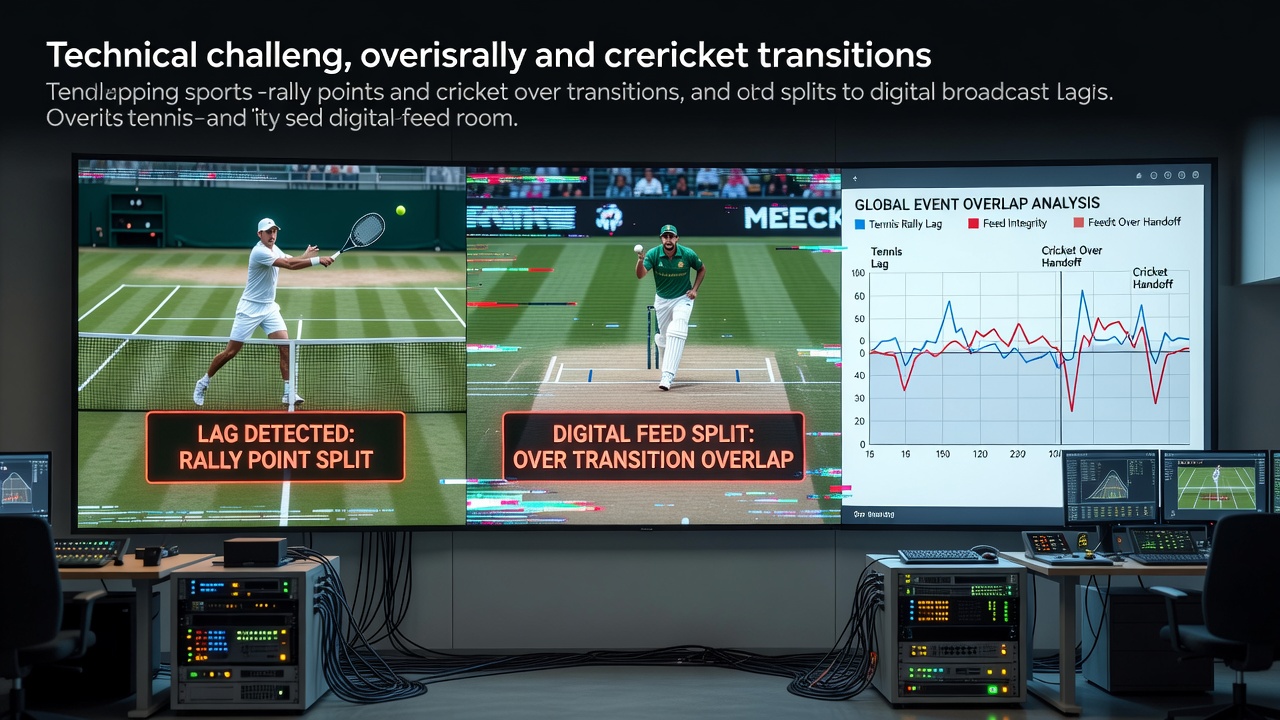
When Broadcast Lags Meet Digital Feeds: Spotting Splits in Tennis Rally Points and Cricket Over Transitions During Overlapping Global Events
Overlapping global sports calendars in August 2026 create frequent windows where tennis majors and cricket internationals run simultaneously, and broadcast delays between traditional television feeds and digital streams produce measurable timing splits that affect rally point resolutions in tennis alongside over transitions in cricket. Observers note that these splits emerge because satellite and cable transmissions often trail internet-based streams by several seconds, while digital platforms update score data almost instantly through official data providers.
Understanding the mechanics of broadcast timing differences
Production teams at major events route live pictures through encoding and distribution chains that vary by provider, so a tennis point that ends on court reaches some viewers later than others depending on the path. Researchers tracking these patterns during simultaneous tournaments have documented average lags ranging from two to eight seconds between linear broadcasts and app-based feeds, and those gaps widen further when network congestion occurs in high-viewership regions. Cricket coverage follows similar patterns because over changes require rapid camera switches and graphics updates that digital services process ahead of traditional signals.
Tennis rally points and the lag window
During a tennis rally the ball stays in play for extended exchanges that can last ten or more seconds, which means a delayed feed may still show an earlier point while the digital stream has already registered the winner and updated associated markets. Data from monitoring services indicate that bettors who cross-reference multiple sources sometimes identify brief discrepancies in point-by-point odds before they align across platforms. Those who study these intervals report that the effect becomes most pronounced in tie-breaks where every point carries heightened market sensitivity and where multiple overlapping matches from different time zones compound the volume of simultaneous feeds.
Cricket over transitions under similar conditions
Cricket presents a different rhythm because overs end at fixed six-ball counts, yet the transition between overs involves field resets, bowler changes, and fresh betting markets on the next over's run range or wicket likelihood. When a broadcast lags, the digital feed may already display the new over's odds while the television picture still shows the final delivery of the previous over, creating a short period where markets appear out of sync. Studies of past overlapping schedules show that these transition windows average between four and seven seconds, long enough for automated monitoring tools to flag pricing differences across bookmakers that use separate data sources.
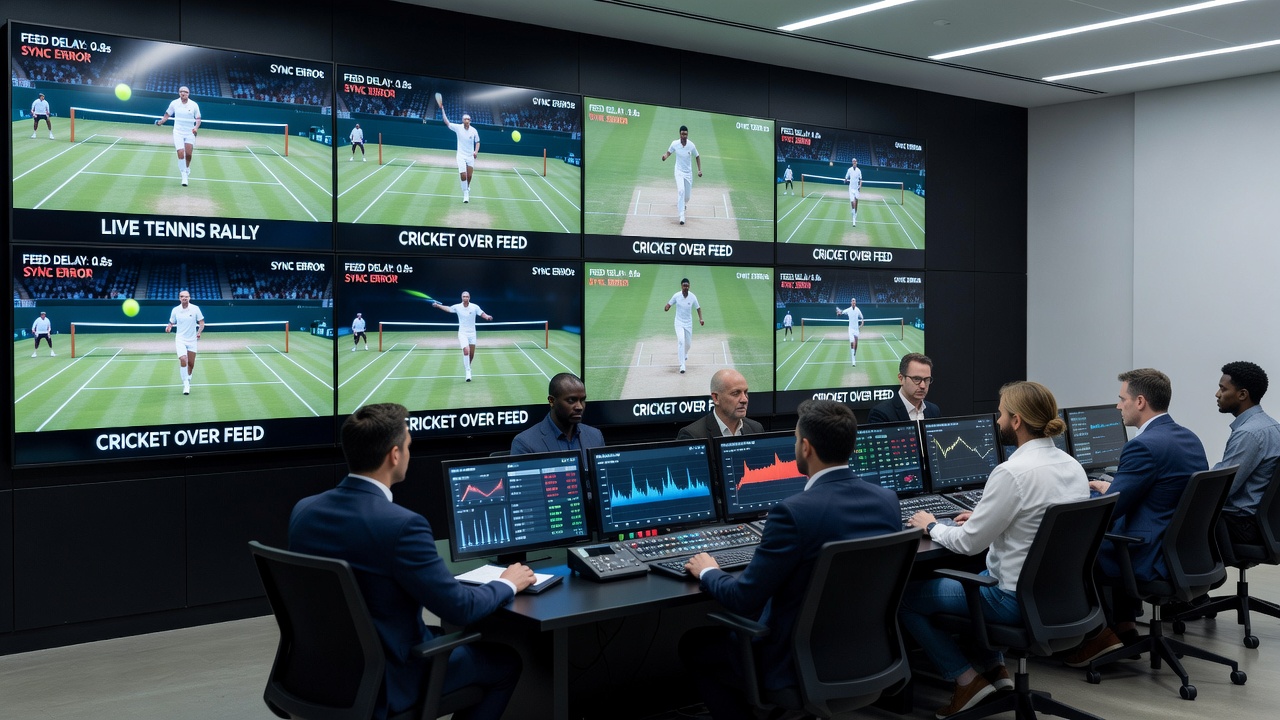
August 2026 schedules include several instances where late-stage tennis matches from North American hard-court events coincide with day-night cricket internationals in Asia and Europe, increasing the number of simultaneous streams and therefore the frequency of observable timing splits. Regulatory bodies such as the Australian Communications and Media Authority have published guidance on broadcast integrity that addresses how timing consistency supports fair information flow for audiences, while industry reports from the Sports Video Group detail technical factors that contribute to variable distribution delays across regions.
Practical identification of splits in live settings
Analysts who examine these events describe a process of monitoring multiple synchronized clocks alongside official point and over logs to isolate genuine timing differences from random market movements. Software that pulls timestamped data from both television graphics and digital APIs reveals clusters of discrepancies concentrated around high-action moments such as set points in tennis or powerplay overs in cricket. Observers note that these clusters appear more regularly when events overlap because production resources become stretched across concurrent broadcasts, leading to inconsistent synchronization standards.
Documented patterns from recent overlapping calendars
Records compiled during prior August overlaps show that tennis rally-point splits tend to cluster in matches scheduled after 2:00 p.m. local time when transatlantic feeds compete with evening cricket coverage from other continents. Cricket over-transition splits appear most often during the middle overs when broadcasters adjust camera angles and graphics packages, a period that frequently coincides with tennis changeovers. Figures from sports data firms indicate that the combined effect produces dozens of brief pricing divergences each day when two or more major events run in parallel.
Technical factors influencing delay duration
Encoding standards, satellite uplink distances, and content delivery network loads all contribute to the length of any given lag. Digital platforms that ingest data directly from court-side or stadium sensors bypass many of these steps, which explains why they consistently lead traditional signals. Engineers who maintain these systems report that minor adjustments to buffer sizes or graphics rendering pipelines can shift delays by one or two seconds, enough to alter the visibility of a split during fast-moving phases of play.
Conclusion
Overlapping global events in August 2026 will continue to generate broadcast timing differences that separate tennis rally outcomes and cricket over transitions across feed types. Systematic observation of these differences relies on cross-referencing timestamped sources rather than single-stream viewing, and the resulting data patterns remain consistent with technical characteristics of modern distribution networks. Those monitoring the calendars can expect similar windows to recur whenever major tennis and cricket schedules intersect.